Discover Your Next Run
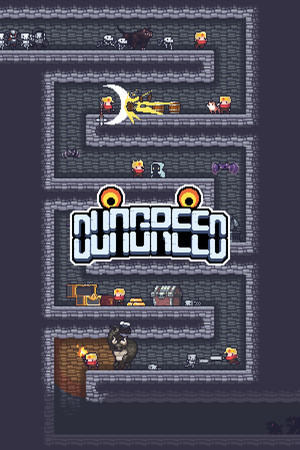
Side-view action
Dungreed Review
Roguelike Radar editorial ·
A side-view dungeon run driven by equipment, skills, and RPG progression.
Is Dungreed worth playing?
Dungreed leans further into equipment and RPG progression than most side-view roguelites, so a new weapon can redirect the entire attempt rather than simply raise damage. The combat and loot are immediately readable, although persistent upgrades and town rebuilding make repeated resource runs a central part of the experience.
From the official description
Dungreed is a 2D side-scrolling action game with 2D Rogue-LITE elements. You become an adventurer exploring a continuously evolving dungeon to prevent the town…
Read more on Steam
What makes it distinct
Weapons, armor, accessories, skills, and food bonuses combine into a temporary equipment build while town progress strengthens later expeditions.
What holds up
- Equipment changes reach, attack rhythm, mobility, and survivability in ways that are easy to feel.
- A broad loot pool gives players more direct control over build identity than many action platformers.
What to know first
- Permanent statistics can matter as much as learning encounters, especially during the middle progression arc.
- Rebuilding and resource requirements encourage repetition beyond what the room variety naturally supports.
Who should play Dungreed?
Players who want a side-scrolling roguelite with tangible loot and a visible long-term growth path.
Players who prefer low-grind runs where nearly all improvement comes from execution and knowledge.
How Dungreed plays
- Combat
- Manual
- Run shape
- Procedural rooms and stages
- Build lives in
- Weapons + Items + Route choices
- Long-term power
- Light–medium
- Run variance
- High
- View
- Side-view
Platforming action
25–60 min per attempt
Room rewards · Shops · Stage transitions
Meta progression
How far attempts can diverge
Side-view action