Discover Your Next Run
Deckbuilders
Gordian Quest Review
Roguelike Radar editorial ·
A party RPG combining decks, equipment, talents, and grid positioning.
Is Gordian Quest worth playing?
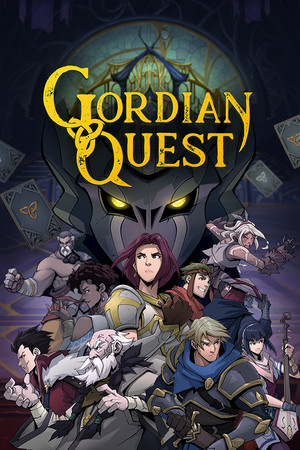
Gordian Quest treats deckbuilding as one layer inside a large party RPG. Heroes bring personal cards, talent grids, attributes, equipment, and positional roles to long campaigns, producing enormous customization at the cost of the clean cause and effect that makes simpler card games easy to read.
From the official description
An epic deckbuilding RPG inspired by old-school classics like Ultima and D&D, using modern gaming concepts like roguelite elements and turnbased strategic combat. Lead…
Read more on Steam
What makes it distinct
Three heroes fight on opposing formation grids while cards, gear, attributes, skill ranks, and talent paths all contribute to the party build.
What holds up
- A large roster and several progression layers support highly specific party combinations over long campaigns.
- Positioning and hero roles give support, control, and movement cards persistent tactical value.
What to know first
- Equipment, talents, attributes, decks, and campaign systems compete for attention around every decision.
- Persistent progression can blur whether success came from a better plan or accumulated character power.
Who should play Gordian Quest?
RPG players who enjoy managing a party across many hours and do not mind several build systems operating at once.
Players who want the elegant economy of a pure deckbuilder or a complete run in one sitting.
How Gordian Quest plays
- Combat
- Turn-based
- Run shape
- Encounters and branching choices
- Build lives in
- Deck + Relics + Party choices
- Long-term power
- Light
- Run variance
- Very high
- View
- Abstract / tactical
Cards and tactics
40–90 min per attempt
Combat rewards · Shops · Events
Meta progression
How far attempts can diverge
Deckbuilding strategy