Discover Your Next Run
Deckbuilders
Trials of Fire Review
Roguelike Radar editorial ·
Party cards, equipment, and grid tactics unfold across a harsh journey.
Is Trials of Fire worth playing?
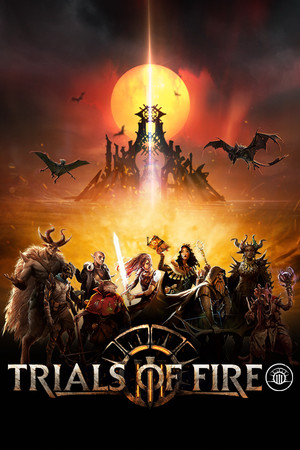
Trials of Fire makes the deck only one part of a larger survival expedition. Three heroes share cards generated by their abilities and equipment, battles unfold on a hex grid, and food or morale decisions on the road can constrain the next fight before it begins.
From the official description
A Tactical, Deck-Building Roguelite. Choose 3 Heroes and adventure into a post-Cataclysmic wasteland. Engage enemies in a unique meld of card-play and tactical, positional…
Read more on Steam
What makes it distinct
Equipment contributes cards to a party deck, while heroes spend those cards to attack, move, defend, or convert them into shared willpower on a tactical grid.
What holds up
- Position, hand management, equipment, and journey resources give each card consequences beyond its printed effect.
- Party composition changes both the available deck and the tactical roles present on the battlefield.
What to know first
- Interlocking survival and combat rules demand more sustained attention than a focused deckbuilder.
- The severe presentation and wasteland pacing can feel exhausting across a full expedition.
Who should play Trials of Fire?
Players who want card play embedded in a difficult tactical journey rather than separated into clean encounters.
Players seeking quick runs, a small ruleset, or combat without resource pressure from an overworld.
How Trials of Fire plays
- Combat
- Turn-based
- Run shape
- Encounters and branching choices
- Build lives in
- Deck + Relics + Party choices
- Long-term power
- Light
- Run variance
- Very high
- View
- Abstract / tactical
Cards and tactics
40–90 min per attempt
Combat rewards · Shops · Events
Meta progression
How far attempts can diverge
Deckbuilding strategy