Discover Your Next Run
Deckbuilders
Roguebook Review
Roguelike Radar editorial ·
Two heroes share a deck while front-and-back positioning affects combat.
Is Roguebook worth playing?
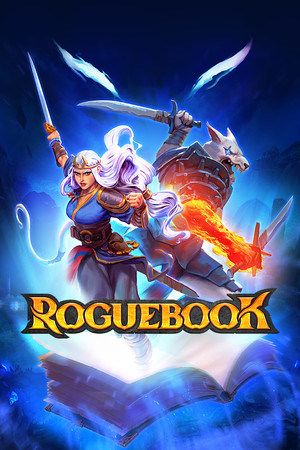
Roguebook builds one deck from two heroes and makes their order on the battlefield part of almost every turn. Pairing character pools, protecting the rear hero, and exploring a map revealed with limited ink create strong build expression, although progression and balance do not always reward every partnership equally.
From the official description
Embrace the challenge of a roguelike deckbuilder with unique mechanics from the developers of Faeria and Richard Garfield, creator of Magic: The Gathering™. Build…
Read more on Steam
What makes it distinct
Only the front hero receives most attacks and can use certain cards, so switching positions becomes a recurring tactical cost inside a shared deck.
What holds up
- Hero pairs combine personal mechanics into decks that feel more specific than a single neutral card pool.
- Map revelation turns exploration into a resource decision rather than a predetermined node route.
What to know first
- Some pairings and progression unlocks reach reliable power with far less effort than others.
- The open map can add routine searching between the more interesting combat decisions.
Who should play Roguebook?
Players who enjoy discovering character pairs and using position changes as part of deck construction.
Players who want perfectly even hero balance or a direct sequence of battles without exploration.
How Roguebook plays
- Combat
- Turn-based
- Run shape
- Encounters and branching choices
- Build lives in
- Deck + Relics + Party choices
- Long-term power
- Light
- Run variance
- Very high
- View
- Abstract / tactical
Cards and tactics
40–90 min per attempt
Combat rewards · Shops · Events
Meta progression
How far attempts can diverge
Deckbuilding strategy